Power Supplies: The Foundation of Electronics
Power supplies are fundamental to any electronic device. Power electronics applications such as EV chargers, computers, welding and automation or medical devices all require efficient current control, monitoring, regulation and protection.
The emergence of Artificial Intelligence and Internet of Things are driving strong demand for data centers, where power distribution and power supplies play a critical role. Furthermore, the adoption of wide bandgap semiconductors — Silicon Carbide (SiC) and Gallium Nitride (GaN) — has improved performance, reduced size, and increased efficiencies of power supplies.
What Current Sensors Ensure in Power Supplies
- Stable power supply output
- Accurate current conversions depending on the various stages
- Timely information in case of corrections or potential switching
- Quick reactions in the event of emergency and failure
Current Measurement for Power Supplies
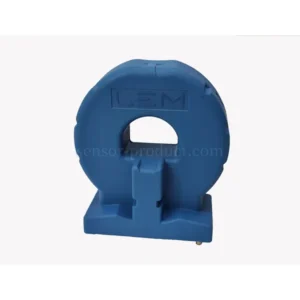
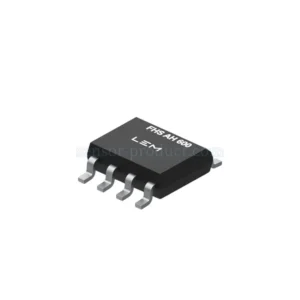
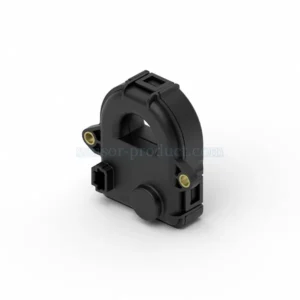
In many applications, the voltage from the grid has to be converted to DC voltage or adjusted to a different AC waveform. The main purpose of a power supply is to convert electric current from a source to the correct voltage, current, and frequency to power the load. A current transducer measures the output current to ensure a stable power supply.
Typical Power Supply Applications
- UPS: Uninterruptible Power Supplies
- SMPS: Switched Mode Power Supplies
- Linear regulators: Low-noise voltage regulation
- Bipolar power supplies: Dual-polarity output
Uninterruptible Power Supplies (UPS)
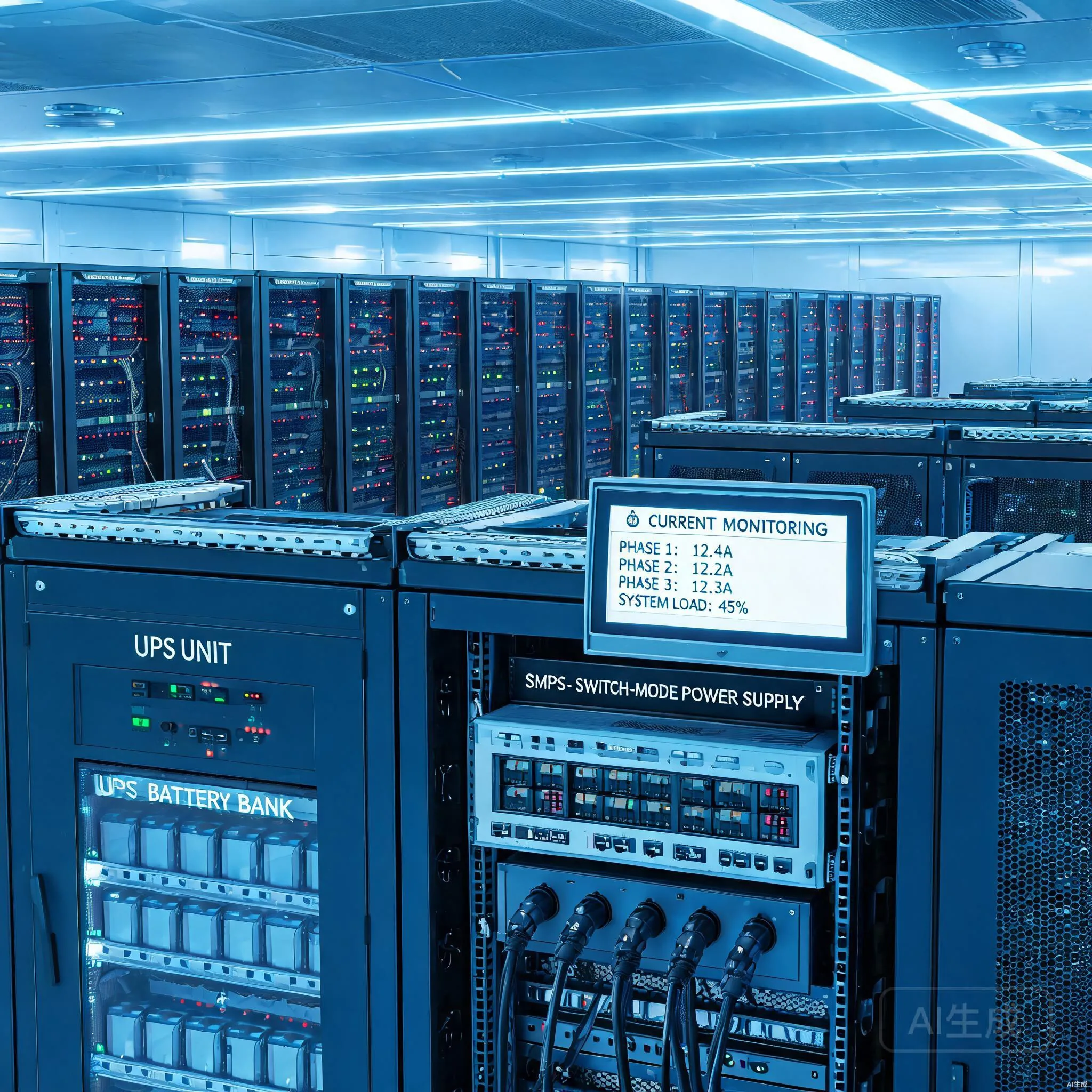
UPS systems are crucial for providing continuous and clean power to critical loads during power failures. Unlike emergency generators, UPS systems deliver immediate power, though typically for a short duration, allowing sufficient time for backup power — normally a battery — to activate or for equipment to shut down safely.
UPS systems are used in applications with critical loads, such as hospitals, industry, or telecommunication and IT infrastructure. The main driver for growth in the UPS market is the proliferation of data centers, triggered by the rapid adoption of Artificial Intelligence.
Role of Current Sensors in UPS
- Monitoring load currents for efficient regulation
- Preventing overloads through anomaly detection
- Ensuring seamless transition to battery power during outages
- Preserving data integrity in IT infrastructure
- Optimizing energy usage and overall system performance
HLSR Series — For Small UPS Applications
- DC & AC isolated current measurement with 5 ranges: 10 A, 20 A, 32 A, 40 A, 50 A (RMS)
- Access to voltage reference
- Low offset & gain drift
- PCB mounting
- 100 kHz bandwidth
Switched-Mode Power Supplies (SMPS)
SMPS are highly efficient devices that convert electrical power from one form to another using high-frequency switching. They are widely used to provide regulated DC voltage for various electronic devices, including laptops, set-top boxes, and smartphone chargers.
Unlike linear power supplies, which are bulky and inefficient, SMPS are compact, lightweight, and typically achieve efficiencies above 85%. The efficiency comes from their use of switches and non-dissipative passive elements like inductors and capacitors, which minimize energy loss.
Current Sensors in SMPS
In SMPS, current sensors provide accurate in-circuit current measurements essential for:
- Limiting over-current conditions
- Optimizing circuit performance
- Controlling power circuits
- Converting sensed current to measurable low voltage for precise regulation
Product Comparison Table
| Product | Current Range Max | Bandwidth | Supply | Accuracy |
|---|---|---|---|---|
| CAS | ±150 A | 200 kHz | +5V | 1% |
| CASR | ±150 A | 200 kHz | +5V | 1% |
| CKSR | ±180 A | 200 kHz | +5V | 0.8%–1% |
| HLSR | ±250 A | 100 kHz | +5V/+3.3V | 1% |
| HMSR | ±75 A | 300 kHz | +5V/+3.3V | 1.25%–1.5% |
| LZSR | ±450 A | 200 kHz | +5V | 0.68%–0.83% |
| HO | ±625 A | 350 kHz | +5V/+3.3V | 1%–1.35% |
| LF | ±4500 A | 200 kHz | +12/+15/+24V | 0.2%–0.6% |
| HOYS | ±2000 A | 180 kHz | +5V/+3.3V | 1%–1.25% |
| HASS | ±1100 A | 240 kHz | +5V | 1% |
Certificates and Standards
Compliance with Industry Standards
- CE marking for electromagnetic compatibility
- IEC 62040-1 & IEC 60950-1 for safety
- IEC 61800-1 & IEC 61800-2 for climatic and mechanical constraints
- IEC 62040-2 for EMC
- RoHS compliant
- ISO TS 16949 certification (Switzerland and China)